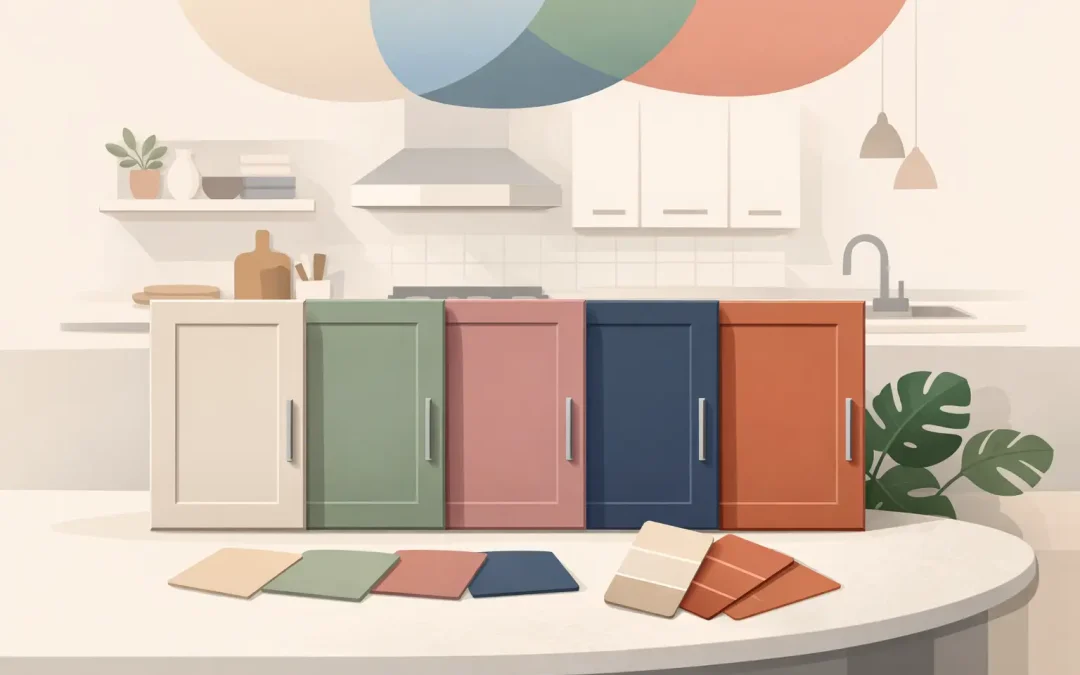
If your kitchen remodel is on the calendar for next year, cabinet color deserves more thought than most homeowners give it. Kitchen cabinets 2026 colors are moving away from the cold, overly sharp looks that dominated for years and toward finishes that feel warmer, steadier, and easier to live with day after day.
That shift matters because cabinets take up major visual space, and replacing or repainting them is not a small correction if the color misses the mark. A good cabinet color should look current, but it also needs staying power. Most homeowners are not remodeling to chase trends every two or three years. They want a kitchen that looks right now and still looks right after years of daily use.
What kitchen cabinets 2026 colors are really trending toward
The biggest change is not one single color. It is the overall direction. In 2026, the market is leaning toward warmth, depth, and natural balance. Bright sterile whites and cool grays are losing ground, while softer off-whites, earthy greens, muted blues, medium wood tones, and richer neutrals are taking over.
This does not mean white cabinets are gone. It means the white that works now has more warmth in it. Instead of harsh builder-grade white, homeowners are choosing creamy whites, soft putty tones, and warm greige shades that feel less clinical. These colors work especially well in kitchens that need brightness but still want some softness.
Green is also holding its place, but the tone matters. The strong social-media greens that felt dramatic a few years ago are giving way to more grounded shades like olive, eucalyptus, and dusty sage. These colors pair well with wood flooring, brushed metal hardware, and natural stone without making the room feel themed.
Blue is still in the conversation, but it is shifting too. Navy remains a dependable option for islands or lower cabinets, yet the more forward-looking choice is a grayer blue or a muted slate tone. These shades bring color into the room without making the cabinetry the only thing anyone notices.
Then there is wood. For many homeowners, wood cabinetry or wood-tone finishes are becoming the strongest answer to trend fatigue. White oak, walnut-inspired tones, and medium natural finishes bring warmth and texture that painted cabinets sometimes lack. In practical terms, they also tend to hide wear in a more forgiving way than flat painted surfaces.
The best cabinet colors for homeowners who want longevity
Trend and longevity are not always the same thing. That is where many remodels go wrong. A color can photograph well and still be a poor fit for the way a family actually uses the kitchen.
If long-term value is the goal, the safest choices in the kitchen cabinets 2026 colors range are warm white, soft taupe, muted green, deep blue-gray, and natural wood tones. These are flexible colors. They work with a wide range of countertops, backsplash materials, and flooring options, which matters if you update other parts of the kitchen later.
Warm white is still one of the smartest cabinet colors because it keeps the room bright and helps resale. The difference is choosing a white with a creamy or neutral base instead of one that pulls icy blue. Cooler whites can make a kitchen feel harder and less inviting, especially in homes that do not get strong natural light.
Muted green has staying power because it reads almost like a neutral when done right. A soft olive or sage can add character without boxing you into one style. It works in traditional kitchens, transitional spaces, and even cleaner modern layouts if the door profile stays simple.
Natural wood tones are another strong long-term play. They bring visual warmth and are less tied to one design moment. The trade-off is that material quality matters more. Cheap wood-look finishes can date a kitchen fast, while a well-selected veneer or solid wood cabinet can age well.
Colors that may look dated faster
Some cabinet colors will likely have a shorter shelf life. Very cool gray is already slipping. In many kitchens, it now reads flat, cold, or distinctly tied to a past design cycle. That does not mean gray is unusable, but the version that works now has to be warmer and more layered.
Very dark black cabinets are another depends-on-the-room choice. They can look sharp in a large kitchen with strong lighting, tall ceilings, and lighter surrounding finishes. In an average kitchen, they often make the room feel smaller and show dust, fingerprints, and wear more quickly.
Overly saturated colors also carry more risk. Deep emerald, bright blue, or strong terracotta might feel bold and custom at first, but they can limit flexibility later. If a homeowner wants personality without overcommitting, it is usually smarter to bring that through an island, hood accent, or backsplash instead of every cabinet wall.
How to choose the right cabinet color for your kitchen
Cabinet color should not be chosen in isolation. It needs to work with the kitchen’s layout, lighting, and the rest of the home’s finishes.
Start with light. A north-facing kitchen or a room with limited natural light usually benefits from warmer cabinet tones. That could mean a soft white, light greige, pale mushroom, or natural oak. In a bright kitchen with strong sun exposure, deeper cabinet colors can hold up better without making the room feel closed in.
Next, look at your countertop and floor together. This is where many homeowners make a costly mismatch. A cabinet color that looks good on a sample chip can clash once it sits next to a busy granite pattern, a yellow-toned hardwood floor, or a cool gray tile. The right choice is often the one that ties the fixed elements together rather than trying to stand apart from them.
Door style matters too. A shaker cabinet in warm white can feel classic and clean. The same color on a heavily detailed door can push more traditional. A slab or flat-panel cabinet in muted green feels modern and restrained, while that same green on ornate cabinetry may read heavier than intended.
That is why full kitchen planning matters more than trend chasing. Color has to support the cabinet style, hardware finish, wall paint, and overall function of the room.
Two-tone kitchens are still strong in 2026
Two-tone cabinetry is not going away, but it is getting more disciplined. Instead of high-contrast black-and-white combinations, homeowners are leaning toward quieter pairings. Think warm white uppers with muted green lowers, or painted perimeter cabinets with a wood-tone island.
This approach works because it adds contrast without making the kitchen feel busy. It can also solve practical design problems. Lighter upper cabinets keep the room open, while darker lower cabinets bring depth and do a better job hiding scuffs and daily wear.
The key is restraint. Too many finishes in one kitchen can make the space feel chopped up. In most cases, two cabinet tones are enough. Once you start mixing several paint colors, wood tones, and metal finishes, the design can lose its clarity.
Why finish and sheen matter as much as color
When homeowners talk about cabinet color, they often ignore finish. That is a mistake. The same paint color can look very different depending on sheen, texture, and material.
For most kitchens, a low-sheen or satin finish gives the best balance. It reflects enough light to feel clean but does not highlight every surface flaw. High-gloss finishes can work in a modern design, but they are less forgiving and usually better suited to very specific layouts.
Wood finishes also vary widely. A natural white oak look can feel current and durable, while orange-heavy stains can date the room quickly. The undertone is what matters. In 2026, cleaner natural woods and medium earthy tones are outperforming red-heavy or overly yellow stains.
A practical way to think about cabinet color before you commit
The best cabinet color is usually not the one that gets the strongest first reaction. It is the one that still feels right after you have looked at it next to your flooring, counters, backsplash, wall color, and lighting for a while.
Homeowners planning a remodel in Monmouth County often ask what color will add the most value. The honest answer is that value comes from the whole job being done right. Good layout, strong cabinet construction, proper installation, and a color that fits the house will outperform a trendy choice every time.
If you are remodeling for your family and planning to stay in the home, choose a cabinet color that supports daily use and fits the style of the house. If resale is a near-term goal, lean toward warm neutrals, soft natural tones, or balanced two-tone combinations that appeal to a wider range of buyers.
A kitchen should not feel dated the moment a trend shifts. The right 2026 cabinet color is the one that gives your space a cleaner look, more warmth, and a finish you will still be comfortable living with years from now.