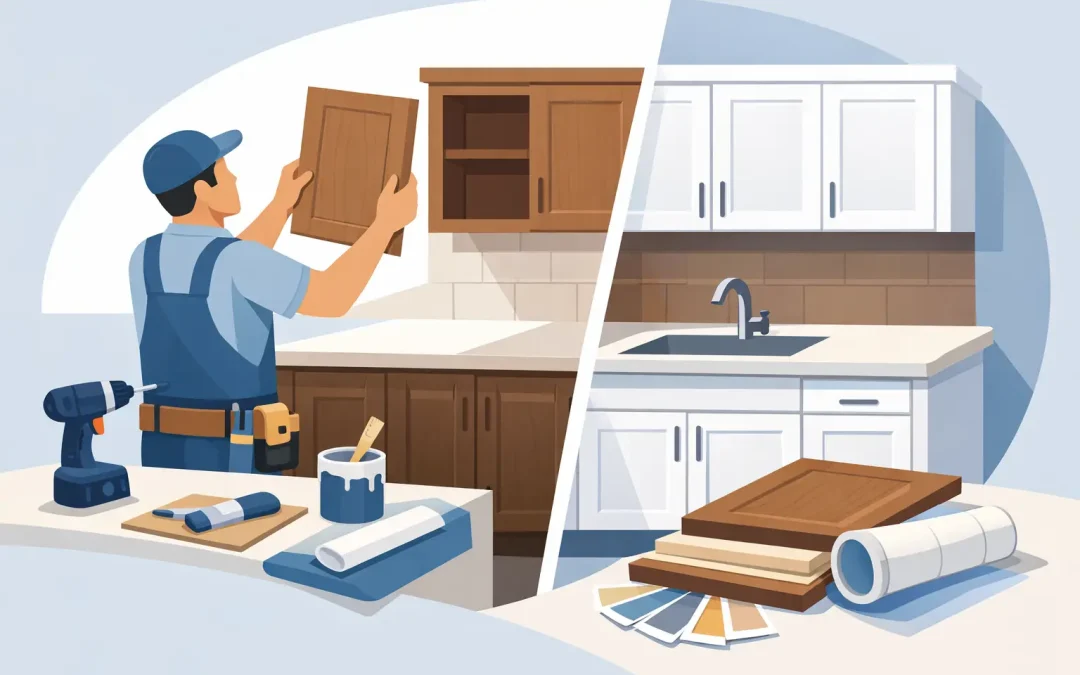
If your kitchen looks worn out but the cabinet boxes are still solid, you may not need a full tear-out. That is usually where homeowners start asking, what is kitchen cabinets refacing, and is it a smart alternative to replacing everything? In plain terms, cabinet refacing keeps the existing cabinet structure in place and updates the visible exterior parts so the kitchen looks new without rebuilding the whole layout.
For many homeowners, that sounds appealing for one simple reason – waste less, spend less, and still get a major visual upgrade. But refacing is not the right answer for every kitchen. The value comes down to the condition of your cabinets, the layout you have now, and whether you are trying to improve looks only or solve bigger functional problems.
What is kitchen cabinets refacing?
Kitchen cabinet refacing is the process of keeping your current cabinet boxes while replacing or covering the exposed exterior surfaces. In most projects, that means new doors, new drawer fronts, updated hardware, and a veneer or laminate finish applied to the cabinet face frames and visible end panels.
When the work is done correctly, the kitchen can look close to a full cabinet replacement from the outside. The basic footprint stays the same, but the style, finish, and overall appearance change in a noticeable way. If your existing cabinets are structurally sound and your kitchen layout already works well, refacing can be a practical middle-ground option.
This is why refacing is often considered during kitchen remodeling projects where homeowners want a cleaner, more modern result without the cost and disruption of brand-new custom cabinetry.
How cabinet refacing works
The process starts with evaluating the cabinet boxes. A contractor checks whether they are level, stable, free of major water damage, and worth keeping. If the boxes are weak, warped, or poorly built to begin with, refacing usually stops making sense.
Once the existing structure passes inspection, the old cabinet doors and drawer fronts are removed. The exposed cabinet frames and sides are then prepared and covered with a matching finish, often wood veneer or a durable laminate product. New doors and drawer fronts are installed, followed by new hinges, handles, and knobs.
Depending on the scope, some projects also include soft-close hardware, crown molding, light trim, under-cabinet lighting, or modifications to add better storage accessories inside the cabinets. That said, refacing is still mostly an exterior upgrade. It improves the look dramatically, but it does not automatically fix every storage or layout issue.
What refacing includes and what it does not
This is where homeowners need clear expectations. Refacing can give you new style, new color, and a more updated finish, but it is not the same as building a kitchen from scratch.
A typical refacing project includes replacing cabinet doors and drawer fronts, finishing visible cabinet surfaces, and installing updated hardware. It may also include minor trim work or simple accessory upgrades.
What it usually does not include is moving plumbing, changing the kitchen layout, expanding cabinet sizes, or correcting a bad floor plan. If your current kitchen lacks enough storage, has awkward appliance placement, or needs structural changes, refacing may only improve the appearance while leaving the real problems untouched.
That is why honest planning matters. A kitchen can look much better after refacing and still not function the way your family needs it to.
When cabinet refacing makes sense
Refacing is usually a strong option when the cabinet boxes are in good shape and the kitchen layout already works for your daily routine. If you like where the sink, range, and refrigerator are, and you are mainly unhappy with old finishes, dated doors, or worn surfaces, refacing can be a cost-conscious upgrade.
It also makes sense when homeowners want less disruption. Full cabinet replacement often leads to a broader chain of work, including countertop removal, backsplash replacement, drywall repairs, flooring adjustments, and sometimes plumbing or electrical updates. Refacing is generally more contained.
This approach can also be a good fit for homeowners preparing to stay in their home but wanting a cleaner, more current kitchen without taking on a full-scale remodel. In established homes across New Jersey, that balance of improved appearance and controlled cost is often exactly what people are looking for.
When refacing is the wrong choice
Refacing is not a shortcut for cabinets that are already failing. If the cabinet boxes have water damage, sagging shelves, weak joints, mold issues, or poor-quality construction, covering them up does not solve the underlying problem.
It is also the wrong choice if your kitchen layout is inefficient. If you need more usable storage, larger drawers, a better island setup, or a new traffic flow, keeping the same cabinet structure may hold the whole project back. In those cases, replacement is usually the better investment because it fixes both appearance and function.
Another common issue is trying to pair refacing with major countertop or layout changes. Sometimes homeowners start with refacing to save money, then add enough upgrades that a full remodel would have made more sense from the start. That is why the project should be looked at as a whole, not as a single line item.
Cost versus full replacement
One reason people ask what is kitchen cabinets refacing is because they are comparing budget options. In general, refacing costs less than full cabinet replacement, but the difference depends on materials, kitchen size, door style, hardware quality, and whether other remodeling work is happening at the same time.
Refacing can save money because the cabinet boxes stay in place. Labor is usually lower than a complete demolition and rebuild, and the project often moves faster. But homeowners should not assume it is cheap. Quality doors, durable finishes, and skilled installation still matter. A low-cost refacing job that uses poor materials or sloppy fitting can look worn long before it should.
On the other hand, full replacement gives you more freedom. You can change the layout, improve storage, correct construction issues, and build around how your family actually uses the kitchen. So the real question is not just what costs less today. It is what gives you the better long-term result for your home.
Appearance, durability, and resale value
A well-executed refacing project can make a kitchen look dramatically newer. Updated shaker doors, modern hardware, and a clean finish can shift the room from dated to current without changing the entire footprint.
Durability depends on the materials and the workmanship. If the existing cabinet boxes are strong and the new components are installed properly, refaced cabinets can hold up well for years. If shortcuts are taken, edges may peel, finishes may wear unevenly, and doors may not align correctly.
From a resale standpoint, buyers usually respond to the overall look and condition of the kitchen more than the technical method used to update it. A kitchen that looks clean, functional, and professionally finished is a plus. But if the rest of the room still feels outdated, refacing alone may not deliver the impact homeowners expect.
Choosing the right contractor for cabinet refacing
Refacing is detail work. The finished result depends on precise measurements, clean surface prep, consistent installation, and a strong eye for fit and finish. Even small mistakes show up fast on cabinet lines, door gaps, and exposed edges.
That is why it helps to work with a contractor who looks beyond the doors and panels and evaluates the full condition of the kitchen first. A dependable remodeling professional should tell you if your cabinets are good candidates for refacing and, just as important, when they are not.
For homeowners, that kind of straight answer matters more than a sales pitch. You want to know whether refacing will actually solve the problem you are trying to fix, not just whether it is the fastest estimate to produce.
Should you reface or replace?
The answer comes down to what your kitchen needs most. If the cabinet structure is solid, the layout still works, and your main goal is to update the look, refacing can be a smart and efficient option. If the kitchen has deeper issues with storage, function, damage, or layout, replacement is usually the stronger long-term decision.
The best remodeling decisions are rarely about picking the cheapest route. They are about choosing the option that fits the condition of the home, the way your family uses the space, and the level of improvement you actually want. A kitchen should not just look better when the job is done. It should feel better to use every day.