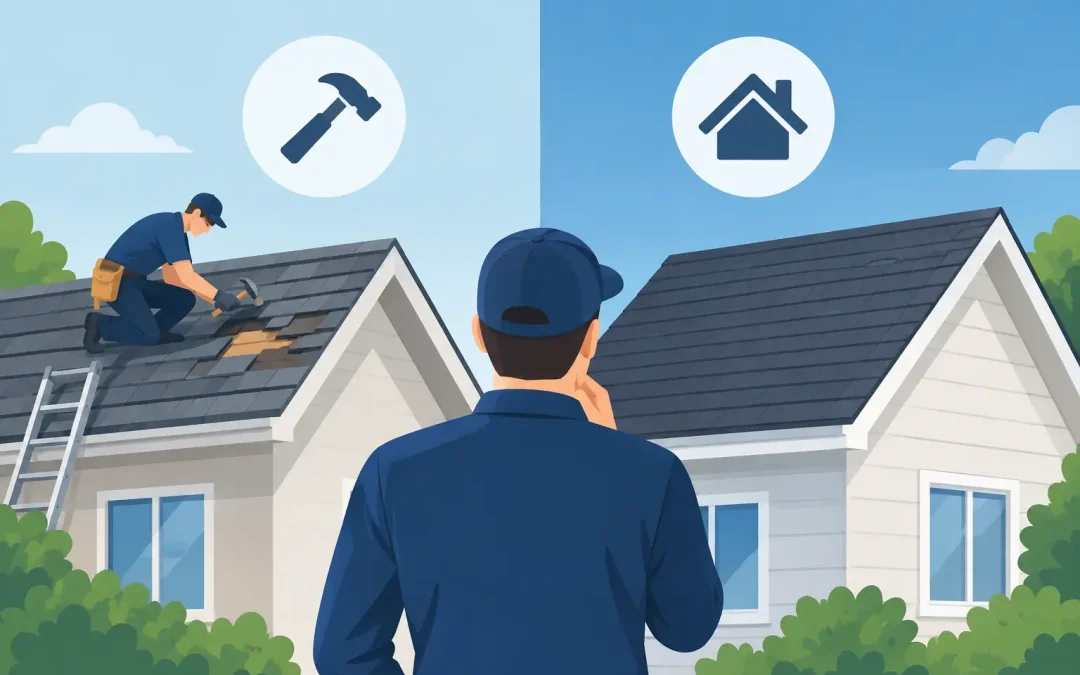
A water stain on the ceiling, missing shingles after a storm, or granules collecting in the gutter can put homeowners in a difficult position. The roof repair vs replacement decision is not just about stopping a leak today. It is about protecting the structure of your home, making a responsible investment, and avoiding repeat repairs that cost more over time.
A proper answer starts with an on-site assessment. Roof damage can look minor from the ground while moisture is working its way into decking, insulation, or framing. On the other hand, replacing a roof that still has years of reliable service left is not always the best use of your budget. The right choice depends on the roof’s age, the extent and location of damage, its repair history, and the condition of the materials beneath the shingles.
Roof Repair vs Replacement: What Actually Determines the Answer?
The size of the problem matters, but it is not the only factor. A localized issue on a relatively new roof can often be repaired effectively. A few damaged shingles, lifted flashing around a chimney, or a leak caused by a failed pipe boot are common examples. When the surrounding roofing materials are sound, a targeted repair can restore protection without the cost and disruption of a full replacement.
Age changes the calculation. Asphalt shingle roofs do not all age at the same rate, but a roof nearing the end of its expected service life is more likely to have widespread wear. Even if one leak can be patched, the shingles around it may be brittle, curled, or losing their protective granules. Repairs may become a short-term answer to a roof that is already declining across the entire surface.
The condition of the roof deck is equally important. Shingles are the visible layer, but the decking below them provides the foundation for the roofing system. Soft spots, sagging areas, recurring leaks, or visible moisture damage in the attic can point to problems beyond a surface-level repair. In those cases, removing the old roof may be the practical way to identify and correct the full extent of the damage.
When a Roof Repair Makes Sense
Repair is often the right option when the damage is isolated and the rest of the roof remains in good condition. For example, wind may remove several shingles from one slope while the remaining materials are securely installed and have plenty of useful life left. A professional can replace the affected shingles, inspect the underlayment, and address the cause of the damage.
Flashing repairs are another common situation. Flashing protects vulnerable transitions around chimneys, skylights, dormers, vents, and roof-to-wall connections. A leak in one of these areas does not automatically mean the entire roof has failed. If the surrounding shingles and decking are sound, properly repairing or replacing the flashing can resolve the issue.
A repair can also be appropriate after a single event, such as a fallen branch or isolated storm damage. The key is confirming that the impact did not compromise a larger area than what is visible. A contractor should check for cracked shingles, punctures, lifted edges, exposed fasteners, and damaged decking before recommending a limited repair.
A good repair should blend into the existing system as closely as possible and address the underlying cause. It should not simply cover the symptom. Homeowners should also understand that exact shingle color matching can be difficult on older roofs because sun exposure naturally changes the appearance of materials over time.
Signs Replacement Is the Better Investment
Replacement is usually the stronger long-term choice when damage is widespread or when the roof has reached the end of its usable life. Putting money into frequent repairs can feel less expensive in the moment, but repeated service calls add up. More importantly, ongoing water intrusion can cause damage that extends far beyond the roof itself.
Consider a replacement if you are seeing several of these conditions:
- Shingles are curling, cracking, balding, or losing granules across multiple areas.
- Leaks keep returning, especially after different repairs or in more than one part of the home.
- The roof deck feels soft, shows sagging, or has signs of rot in the attic.
- Storm damage affects a broad section of the roof rather than a small, contained area.
- The roof is near or beyond its expected lifespan and has a growing list of maintenance issues.
A full replacement gives the contractor access to the layers beneath the shingles. This creates an opportunity to replace deteriorated decking, improve underlayment protection, correct ventilation concerns, and install new flashing as part of one complete roofing system. That broader scope is why replacement can offer more reliable performance than piecing together repairs on an aging roof.
For homeowners planning to sell within the next few years, a new roof can also remove a major concern during inspections and buyer negotiations. It is not a guarantee of a higher sale price dollar for dollar, but it can improve confidence in the home’s condition and prevent a failing roof from becoming a deal obstacle.
Cost Is Important, but So Is Cost Over Time
A roof repair typically costs less upfront because it addresses a limited area. That makes it a sensible choice when the roof has significant remaining life and the problem is clearly isolated. A full replacement is a larger investment, but it resets the condition of the roofing system and reduces the likelihood of ongoing patchwork repairs.
The best comparison is not simply repair cost versus replacement cost. It is the cost of the repair compared with the remaining value you will get from the existing roof. Spending a modest amount to gain five to 10 more years of service can be a smart decision. Spending repeatedly on a roof that may continue failing over the next year or two usually is not.
Price should also be tied to scope. A reliable estimate explains what materials will be used, whether damaged decking is included or priced separately, how flashing and ventilation will be handled, and how the property will be protected during the work. Honest pricing is not always the lowest number. It is a clear number that reflects the work required to do the job correctly.
Do Not Ignore Attic Ventilation and Drainage
Many roof problems begin or worsen because of conditions below or around the shingles. Poor attic ventilation can trap heat and moisture, contributing to premature shingle aging, condensation, and higher cooling costs. In winter, uneven roof temperatures can also contribute to ice dams, where melting snow refreezes at the roof edge and forces water back under shingles.
Gutters and drainage deserve attention as well. Clogged gutters can allow water to back up near the roof edge and fascia. Overflowing water can damage siding, trim, and foundations. During a roofing evaluation, it is worth looking at the full exterior system rather than treating the roof as an isolated surface.
New Jersey homes also face seasonal weather changes that can expose weak points quickly. Heavy rain, wind-driven storms, snow loads, freeze-thaw cycles, and humid summers all place demands on roofing materials. A roof that appears acceptable on a dry day may reveal its real condition after the next major storm.
What a Professional Roof Inspection Should Cover
A dependable inspection goes beyond a quick look at the shingles. The contractor should assess the roof surface, penetrations, valleys, ridge areas, flashing, gutters, and visible signs of structural movement. Inside the home, attic checks can reveal water staining, wet insulation, mold concerns, daylight through the decking, or ventilation problems.
The goal is to give you a recommendation that fits the condition of your home, not a one-size-fits-all sales pitch. Ask why a repair is expected to last, what areas will be addressed, and whether there are conditions that could lead to future problems. If replacement is recommended, ask what evidence supports that conclusion and what work is included in the proposal.
It also helps to act early. A small leak may only require a straightforward repair when caught quickly. Left alone, that same leak can saturate insulation, stain ceilings, weaken wood, and create conditions for mold growth. The earlier the issue is evaluated, the more options you are likely to have.
Make the Decision Before the Damage Spreads
The right roof decision should provide a clear path forward. If a focused repair will protect a sound roof for years, it should be done with quality materials and careful workmanship. If replacement is the more responsible answer, the project should address the complete system, not just install new shingles over unresolved problems.
For homeowners in Monmouth County, a professional evaluation can replace uncertainty with a practical plan. Choose a contractor that explains the condition of your roof clearly, respects your budget, and recommends the work your home actually needs. A timely decision now can protect the rest of your home long after the next storm has passed.